Out of context
April 9, 2010

Anemone

Stamen
slr/10
Of mood and mis en scène
April 5, 2010
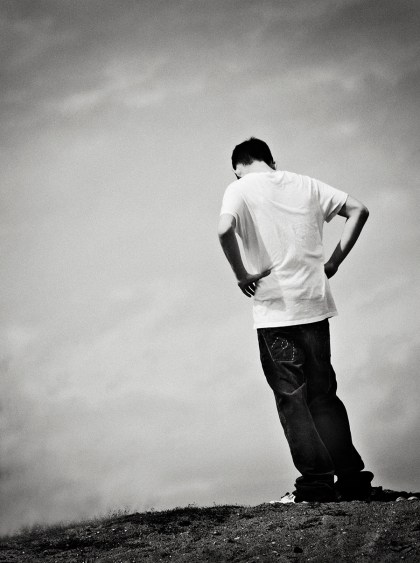
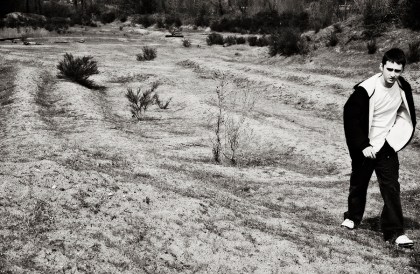
It is my hope that the images reflect something about the individual. The inner and outer life of the boy/man as he trudges through circumstance and missed opportunity, the doubt of new beginnings, and the all-too-real isolation that is our primary condition regardless the presence of another.
And so Dorothea Lange said, “This benefit of seeing… can only come if you pause a while, extricate yourself from the maddening mob of quick impressions ceaselessly battering our lives, and look thoughtfully at a quiet image.”
Looking at these images I find them not so quiet. While the boy/man didn’t have much to say out loud, his presence in the scene did. The land and sky are the visual dialogue of his life.
I am satisfied.
slr/10
Before and After
March 30, 2010
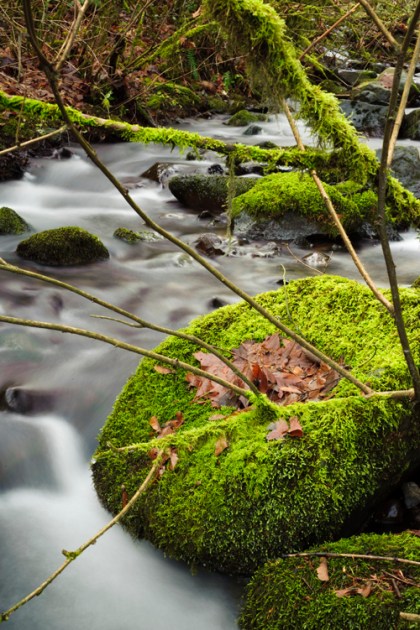
Before
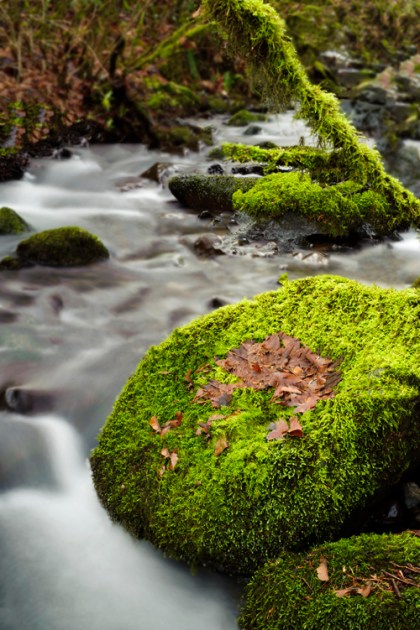
After
There are significant improvements and features in CS5!
Beta testing Photoshop CS5
March 29, 2010
In a word? transformative.
Eudora Welty…
March 16, 2010
said of the snapshot, ” a good [one] stops the moment from running away.”
So, I’m here worrying the thing that deems one photograph a snapshot and the other photograph a bit of art.
Does knowledge/training reduce one’s ability to produce snapshots thereby separating our perception of an image by nothing more than an understanding or notion of what art is?
what the snapshot isn’t?
I still point and shoot. But don’t I look just a bit longer through the viewfinder at the form and direction of things touching, however slightly, the subject of my gaze?
Eudora, doesn’t a good composition also stop the moment from running away?

The Playground
slr/10
The Portrait
February 27, 2010
“When you sit for an hour and a half in front of somebody, he or she shows about twenty faces. And so it’s this crazy chase of, which face? Which one is the one?”
~Francesco Clemente
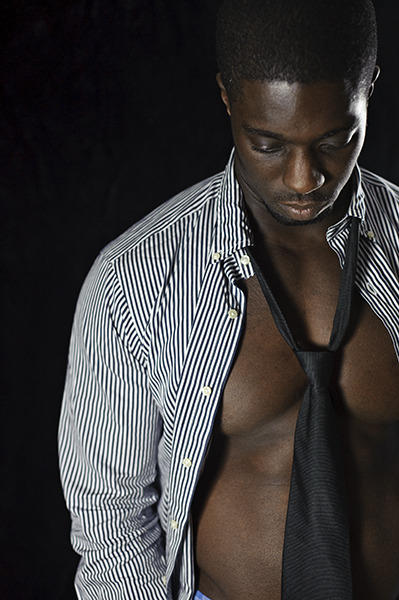
Unmanipulated image
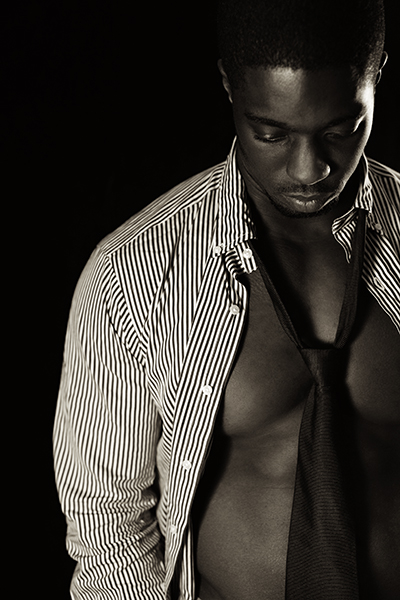
Manipulated
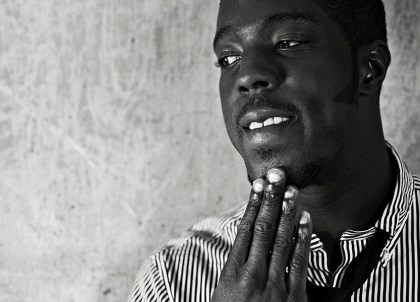
Manipulated
Reflecting on Clemente’s quote, I was compelled to consider the portrait which, by definition, is “a likeness of a person…that is created by a painter or photographer” (freedictionary.com). And here is the problem, description involves language, and language meaning, and meaning semantics–and, you get my meaning, right? Words create problems. Take “likeness” for example.
Is the portrait above a “likeness” of Alix because I “created” it? Or, is it a likeness because a photograph can only project one irreducible split-second of the millions & billions of split-seconds that Alix is? Or is it a likeness, a semblance, because a photograph is not and can never be more than a two dimensional understanding of the thing itself?
I suppose it all comes back to the inescapability of meaning and the limitations that, linguistically, meaning places on interpretation.
Yet the image, the portrait of Alix, well, it has a mood. An emotion. I feel something when I look at the image. Something in between the meaning of sadness and tragic. Something like resignation. Something like…
slr/10
Effect
February 25, 2010
Recently, artistic discussions have revolved around styles, effects, preference, and art movements. As I review recent images, before and after editing, the lingering effects of discussion become evident in my work. Crisp lines are replaced by broader strokes of saturated color. Dreamscapes emerge as artistic movements collide within my conscience. What guides my hand, intention or bias created by inquiry?
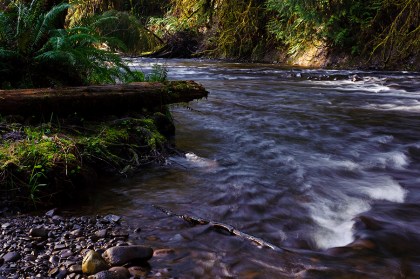
Gnat Creek
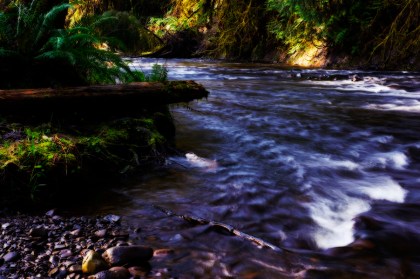
Gnat Creek (post edit)
slr/10
 Intersections Between Language and Photography