on landscapes
April 27, 2010
social. spiritual. environmental. emotional.
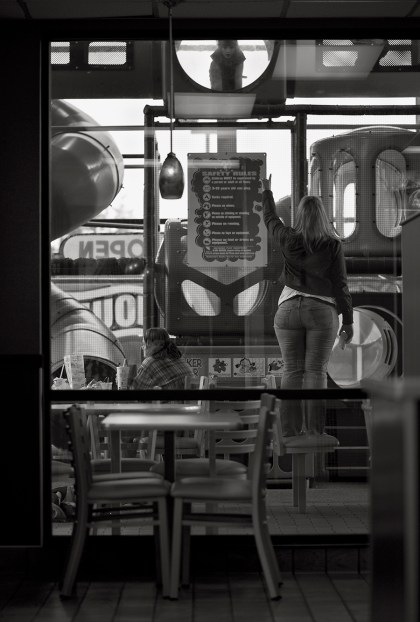
social landscape
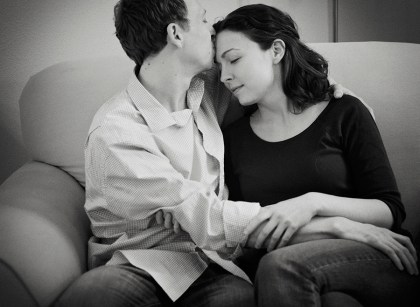
emotional landscape

spiritual landscape

environmental landscape
Ultimately, in the words of Susan Sontag, I have come to believe that “photographs objectify: they turn an event or a person into something that can be possessed.”
These landscapes reflect those intangibles images/representations that come to mind when I consider the landscape and its many implications.
slr/10
Review
April 25, 2010

Ante

Fore

Mykal: Before

Mykal: After
This set of before and after images is intended to represent editing abilities using CS4 and CS5 beta (by invitation from ADOBE via NAPP).
The content aware features in CS5 are remarkable, reducing time spent removing unwanted elements in a photograph as seen in the landscapes above. I’ve successfully removed entire trees from several of the waterfall shots.
CS4 was used on the images of Mykal to remove the facial scarring/imperfections seen in the before picture. Much of the technique I use in portrait editing was learned from independent study using the “Photoshop World Playbook” –particularly Katrin Eismann’s techniques,”Skin” by Lee Varis, and several copies of Photoshop User and Digital Photo Pro. I do recommend attending the Photoshop World Conference–extremely valuable learning opportunity!
Overall, I’ve achieved a solid skill set regarding portrait retouching. Still working through some issues surrounding candid, landscape (rural & urban), and street photography. Primary area of concern? Achieving correct exposure at the time of capture–specifically finding the element in the image that represents 18% grey when I can’t find my grey card (frequent occurrence). Nothing to do, but shoot until I have a solid understanding of correct metering without an additional (handheld) light meter.
Good source of info on metering:
http://www.cambridgeincolour.com/tutorials/camera-metering.htm
slr/10
the thing itself
April 23, 2010
time must be the thing itself. at this moment in my thought processes, anyway. what if it actually stood still? there wouldn’t be a single thing different–no moment before, or after. isn’t that the concern of the photograph? the split-second in between before and after?

in between
i was thinking of gerhard richter’s oil on canvas “two candles” when photographing the hourglass. perhaps it was the shadow and light of “two candles” that prompted “when” I shot the hourglass–the light and shadow. i don’t recall, now. and it was only yesterday i made the photographs.
i think the hourglass needs to be printed in a landscape orientation to represent the continuum. but, then, the light needs to move vertically. mayhap the light will be good again through the north window today.
slr/10
review
April 23, 2010
i reviewed the prints I’ve made thus far. cohesive for the most part, with an occasional interloper upsetting what appears to be a leaning towards landscape. obviously, i need multiple portfolios to cover the different styles/categories–unless i consider the portraits as epithelial landscapes… or, maybe, there’s an idea.
crap! now i’m confused.
behind closed eyes
April 19, 2010

Something hidden
stormy skies wear shades of green reminiscent of childhood skies that swirled with the fierce energy of impending disaster.
slr/10
meaning and vagary in photography
April 15, 2010
right.
after reviewing my research proposal (for history of photography) h made a comment regarding my choice of subject–something along the lines of it’s (the proposal) vague and rather philosophical. it is vague. i’m fleshing the idea out, or at least i was attempting to. now i’m hung up on, “it’s rather philosophical” (higgs). it is philosophical. after reading hirsch, it seems to me the entire history and evolution of photography and photographic processes is explained by philosophy.
but more than that, it is quite evident that the driving force behind photographic movements–photo secession, pictorialism, positivism, realism, spiritualism, i-need-a new-adjective-to-stand-out-from-the-crowdism–is vagary. What better way to define vagary than a series of rambling, philosophical discourses on why something evolved the way it did.
vagary as defined by dictionary.com:
the notion of meaning, outside and out of reach of photography–the meaning of meaning itself–is seductively subjective and viciously vague. to the point i believe meaning escapes concrete definition and, more importantly, any notion of absoluteness. these motions and movements in art are reducible to the most basest human motivation. right now i’m torn; is immortality or greed (however altruistic it may be) that underlying element?
insert complexity. and maybe irony. for, where immortality is concerned, the artist achieves this most notably through the continuation of their name. year after decade. but what is that name, really? insert signifier and signified and a barthes sized scoop of semiotics. without a likeness, be it a painted or photographed portrait, artistic immortality is nothing less than the ordering of symbols (letters) whose meaning is only as absolute as that long dead artist.
is it possible to grant one artistic immortality without their having reached for it? as my thoughts are at this time, i believe a sort of altruistic greed coupled with a need for self-expression that rises above all other self-expressers is the underlying element behind artistic movement.
please feel free to consider this an abstract expression in that I have reduced something to the point of recognizable simplicity, as have so many before me.
i’m off to contemplate what barthes meant when he said, “the bastard form of mass culture is humiliated repetition… always new books, new programs, new films, news items, but always the same meaning.”
slr/10
Out of context
April 9, 2010

Anemone

Stamen
slr/10
 Intersections Between Language and Photography